
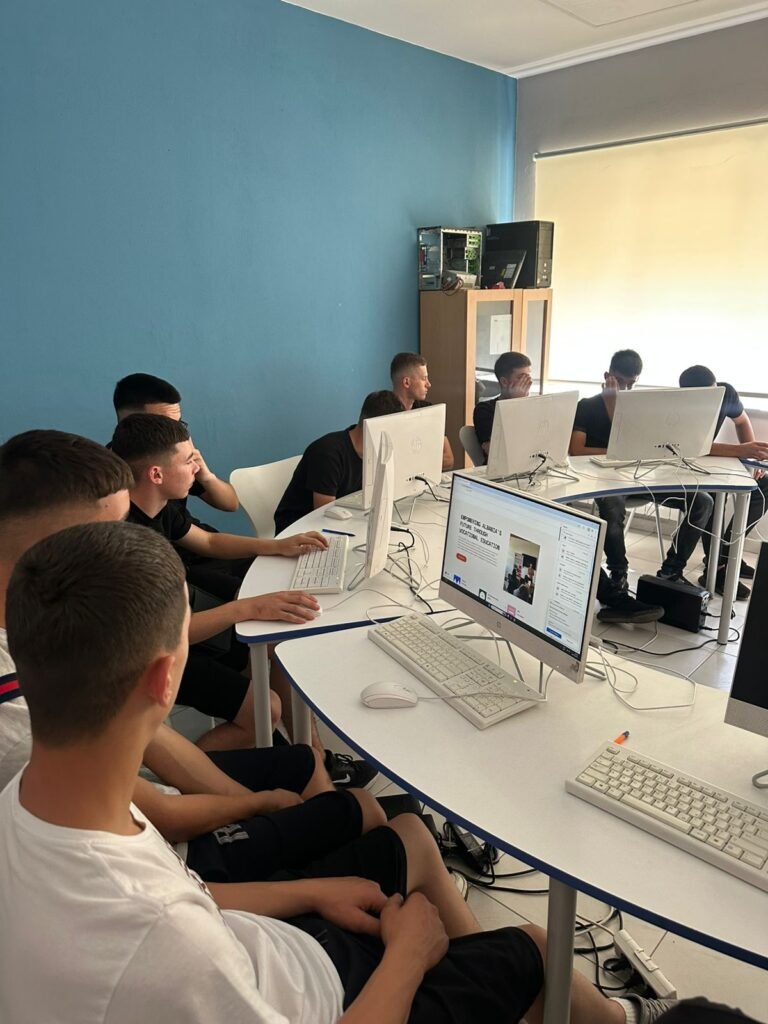
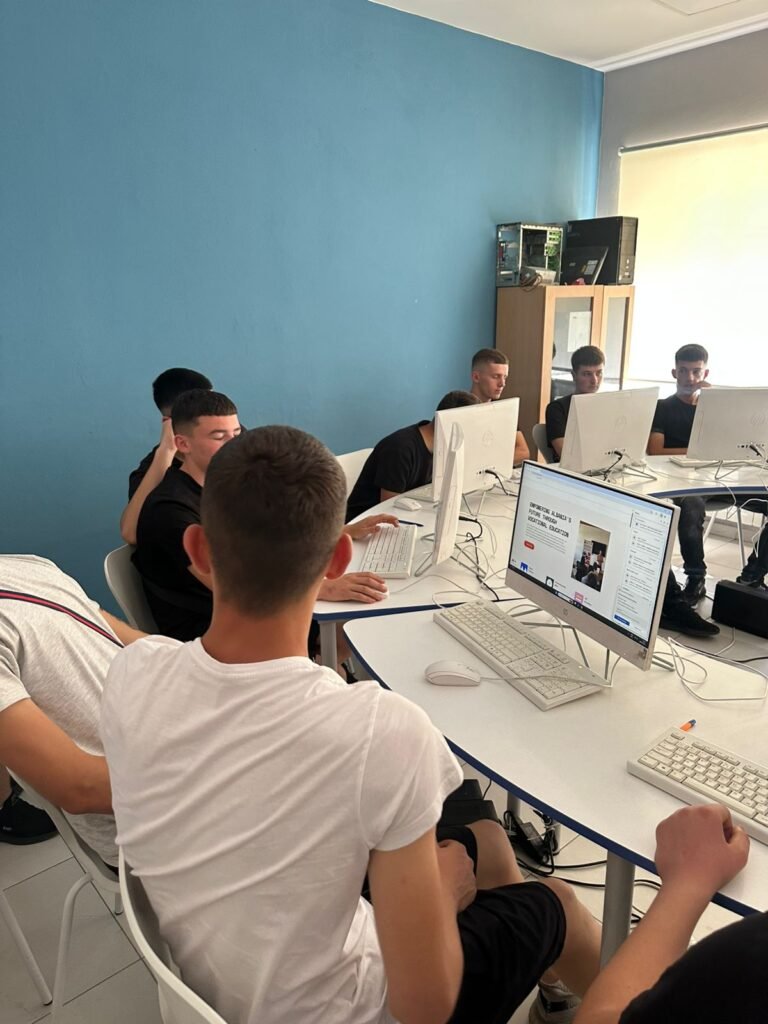
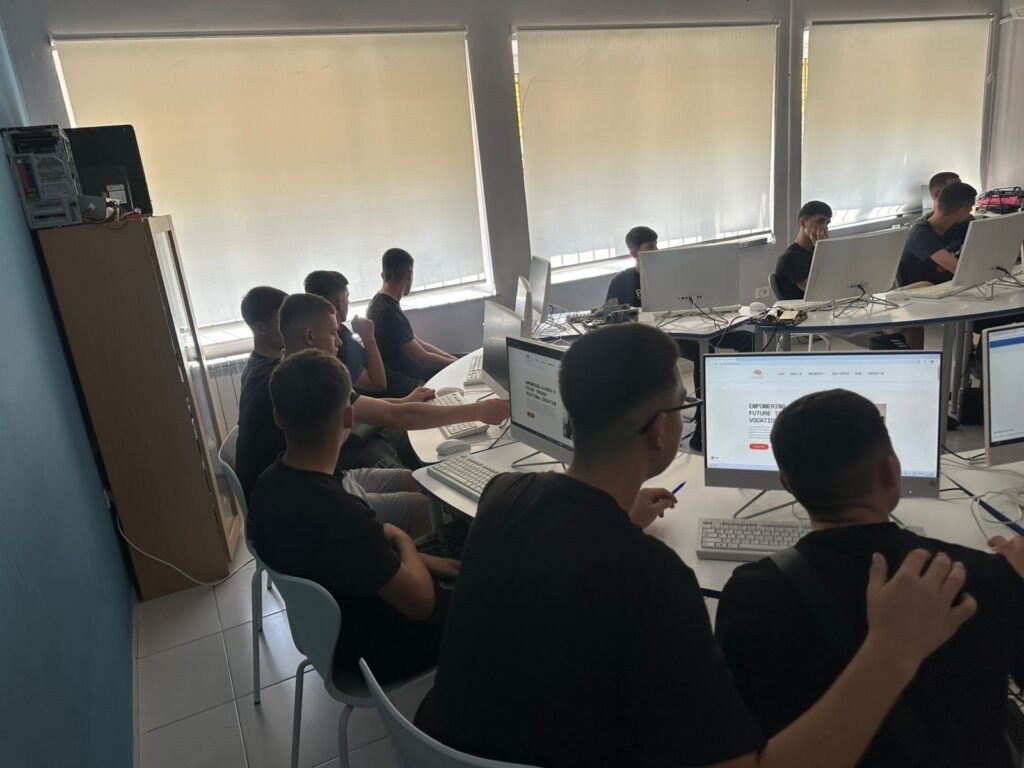
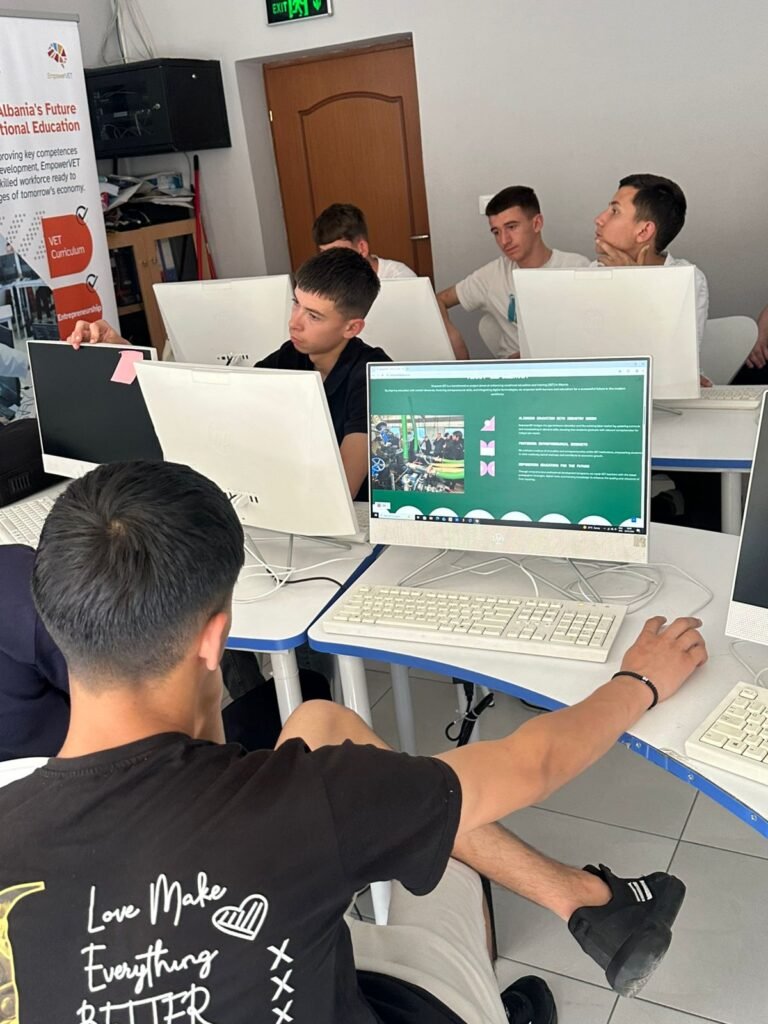
As part of the EmpowerVET project, students from the Vocational School of Elbasan participated in the Urban Mobility Monitoring and Sustainability Challenge, a practical learning activity designed and facilitated by teacher Gentjan Biçaku. The pilot course provided students with the opportunity to investigate real mobility challenges in their local environment while developing important competences related to sustainability, environmental awareness, research, and problem-solving.
The activity was inspired by real experiences from mobility monitoring initiatives implemented in Elbasan and aimed to connect classroom learning with everyday challenges affecting the community. Through a combination of field research, teamwork, data analysis, and solution development, students explored how transportation systems influence safety, accessibility, and environmental sustainability.
The pilot course was implemented using the EmpowerVET methodologies of Competence-Oriented Learning and Design Thinking. These approaches encourage students to become active participants in the learning process by investigating problems, collecting evidence, developing solutions, and reflecting on their learning experience.
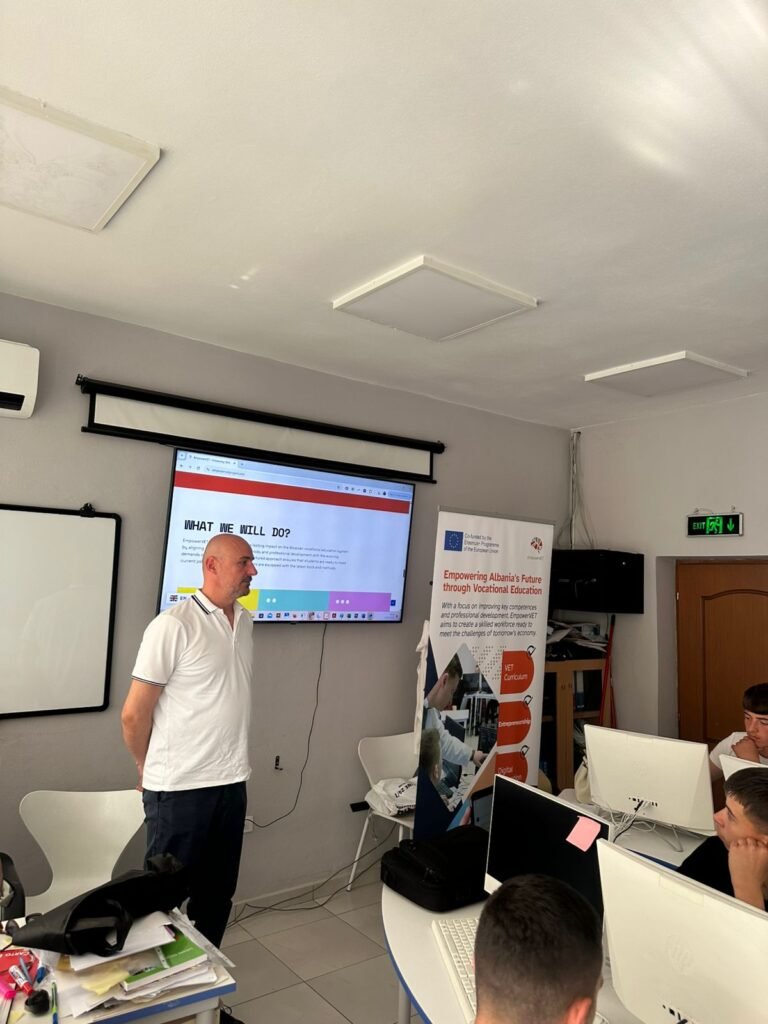
The challenge began with an introduction to sustainable mobility and environmental impacts of transportation. Students learned about urban mobility, traffic congestion, accessibility barriers, environmental pollution, and the importance of sustainable transport solutions for modern communities. Discussions focused on how mobility choices affect quality of life and contribute to broader sustainability goals.
Following the introductory sessions, students conducted field observations around the school area. Working in teams, they monitored traffic flows at different times of the day and collected information about vehicles, pedestrians, bicycles, public transport, and traffic conditions. Students also observed accessibility barriers, road-user behaviour, and environmental factors that could affect mobility and safety.
The field activities allowed students to experience research in a real-world context. They used observation sheets, photographs, videos, and simple traffic counting methods to document their findings. Through direct observation, students gained a deeper understanding of mobility challenges that often go unnoticed in everyday life.
After collecting the data, students analysed their findings and identified the most important mobility issues affecting the school environment. They discussed safety concerns, accessibility limitations, traffic congestion points, and environmental impacts associated with current mobility patterns.
Using Design Thinking techniques, the teams then moved into the solution development phase. Students brainstormed practical ideas aimed at improving mobility conditions around the school. Their proposals included safer pedestrian routes, bicycle parking facilities, awareness campaigns promoting sustainable transport, and measures to improve traffic safety and accessibility.
The activity concluded with a final presentation event where each team presented its Mobility Improvement Proposal. Students shared their observations, supported their conclusions with collected data, and explained the benefits of their proposed solutions. The presentations demonstrated strong engagement, critical thinking, and a growing understanding of sustainable mobility principles.
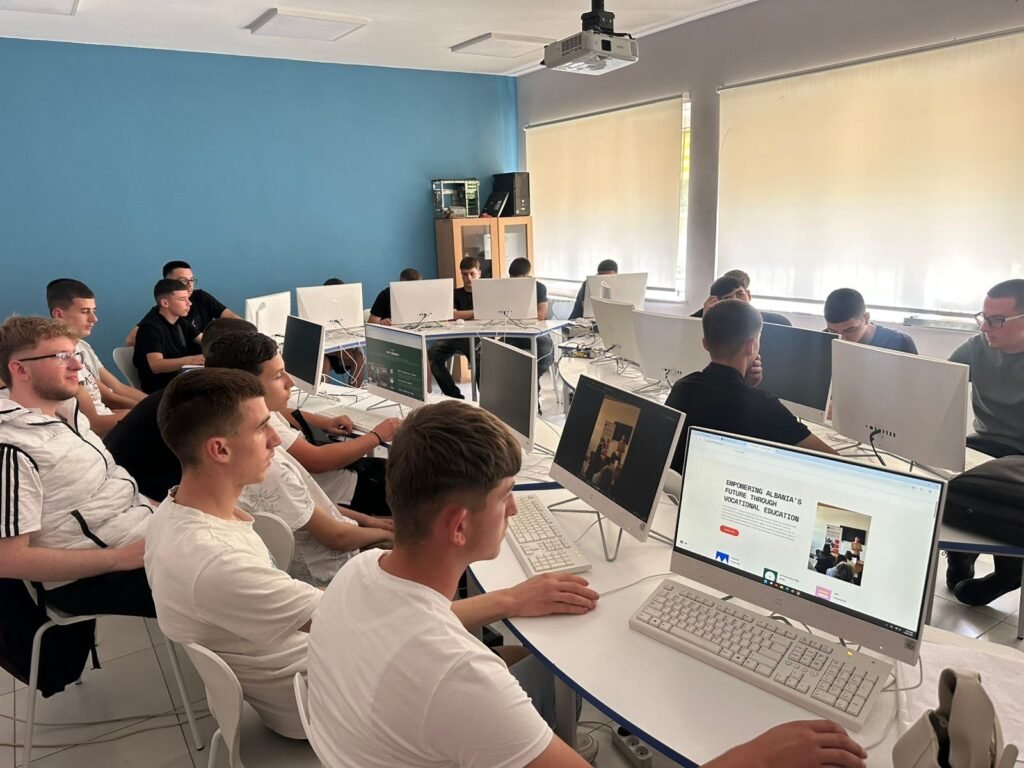
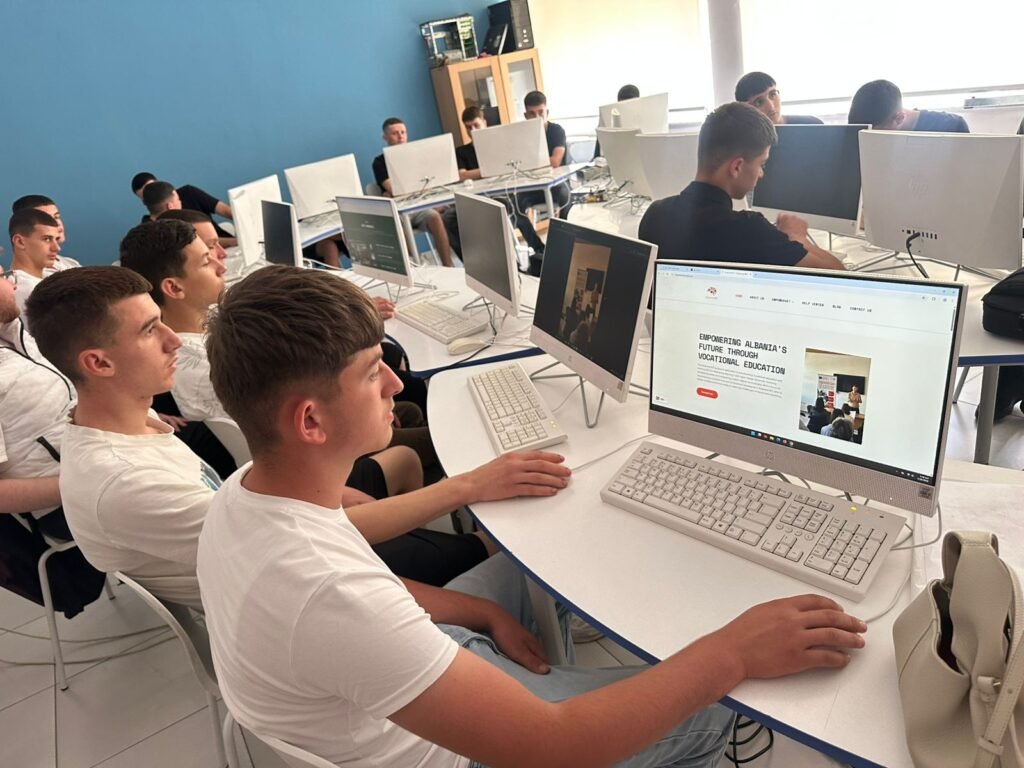
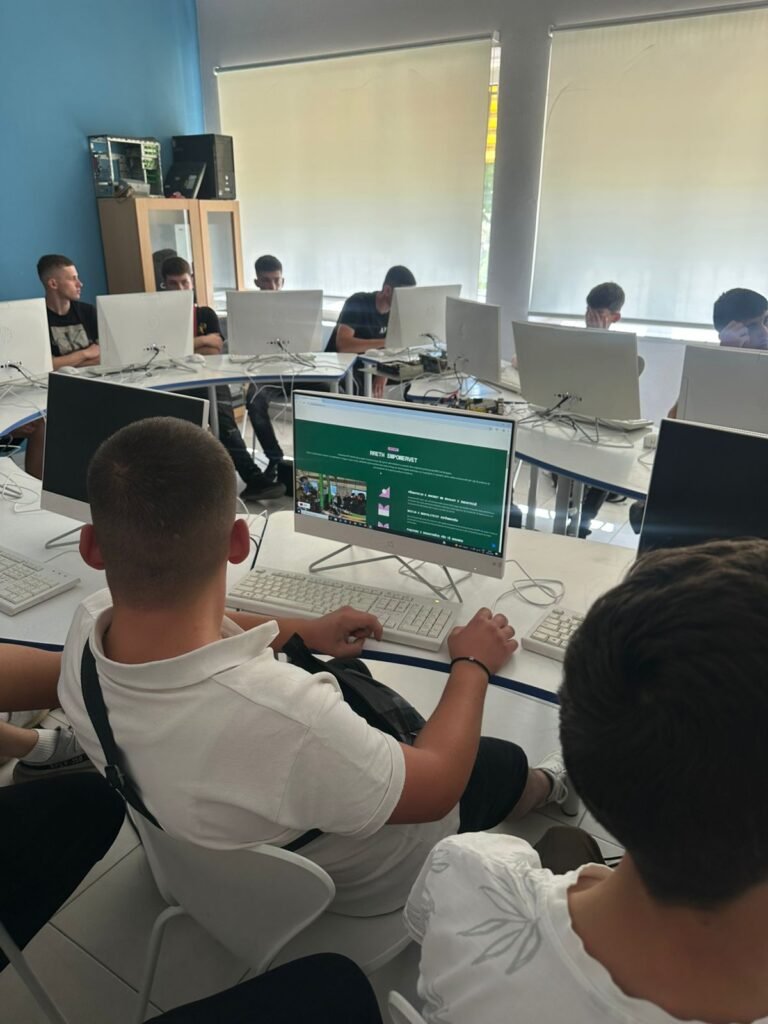
Throughout the challenge, students developed valuable competences including environmental analysis, field research, teamwork, communication, critical thinking, sustainability awareness, and problem-solving. More importantly, they learned how evidence-based decision-making can contribute to positive changes within their communities.
The Urban Mobility Monitoring and Sustainability Challenge demonstrated how vocational education can successfully connect learning with real-life environmental issues. By applying EmpowerVET methodologies in a practical context, students became active investigators and solution designers, contributing ideas that support safer and more sustainable communities.
This pilot activity represents an important step in transferring EmpowerVET approaches into the Albanian VET sector while promoting sustainability, active citizenship, and innovation among young learners.
Disclaimer

Funded by the European Union. Views and opinions expressed are however those of the author(s) only and do not necessarily reflect those of the European Union or the European Education and Culture Executive Agency (EACEA). Neither the European Union nor EACEA can be held responsible for them.