
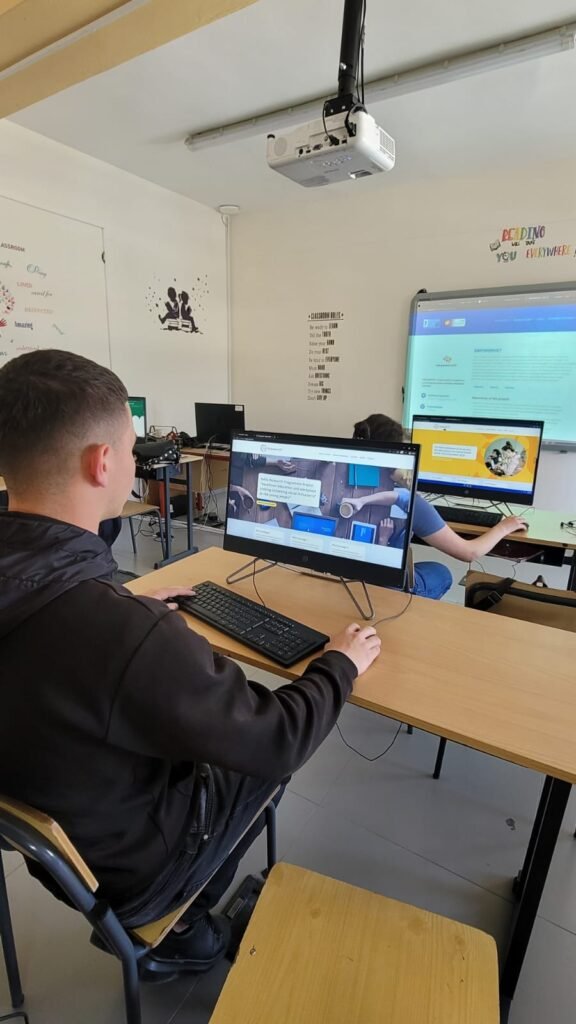
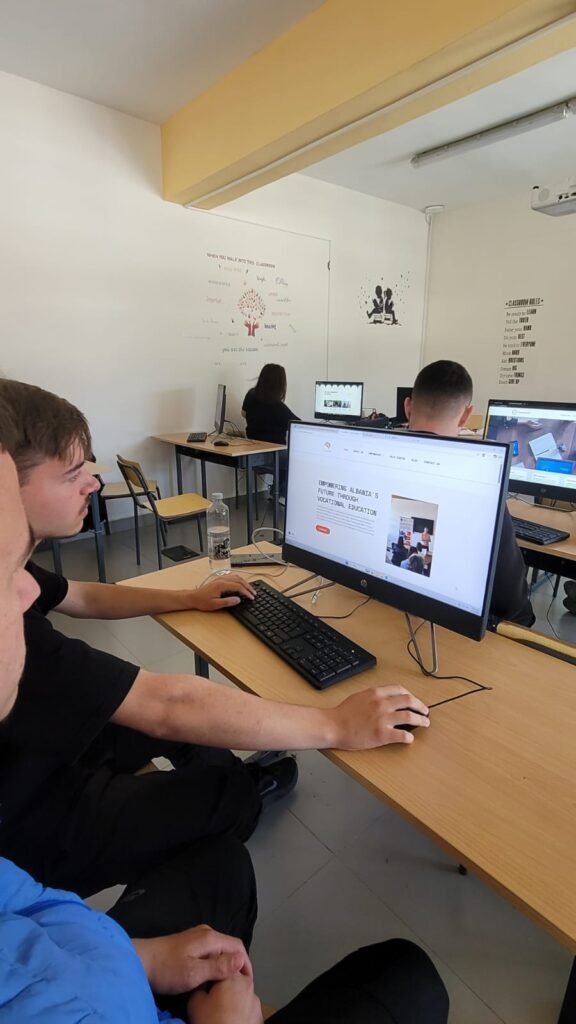
At the Vocational School of Elbasan, students recently participated in the Student Startup and Entrepreneurship Challenge, a pilot learning activity implemented within the EmpowerVET project. Led by teacher Aida Tabaku, the activity introduced students to entrepreneurship, innovation, and creative problem-solving through an engaging and practical learning experience.
The challenge brought together 12 students who worked in teams to explore real problems affecting their school and local community. Rather than focusing only on theoretical concepts, students were encouraged to actively investigate challenges, generate ideas, and develop innovative solutions that could create value for others.
The activity was designed using the EmpowerVET methodologies of Competence-Oriented Learning and Design Thinking. These approaches place students at the centre of the learning process and encourage them to learn through experience, collaboration, reflection, and practical application of knowledge.
The pilot course started with an introduction to entrepreneurship and innovation. Students learned how successful business ideas often emerge from everyday problems and unmet needs. Through discussions and group activities, they explored issues related to school services, environmental sustainability, student needs, and opportunities within their local community.
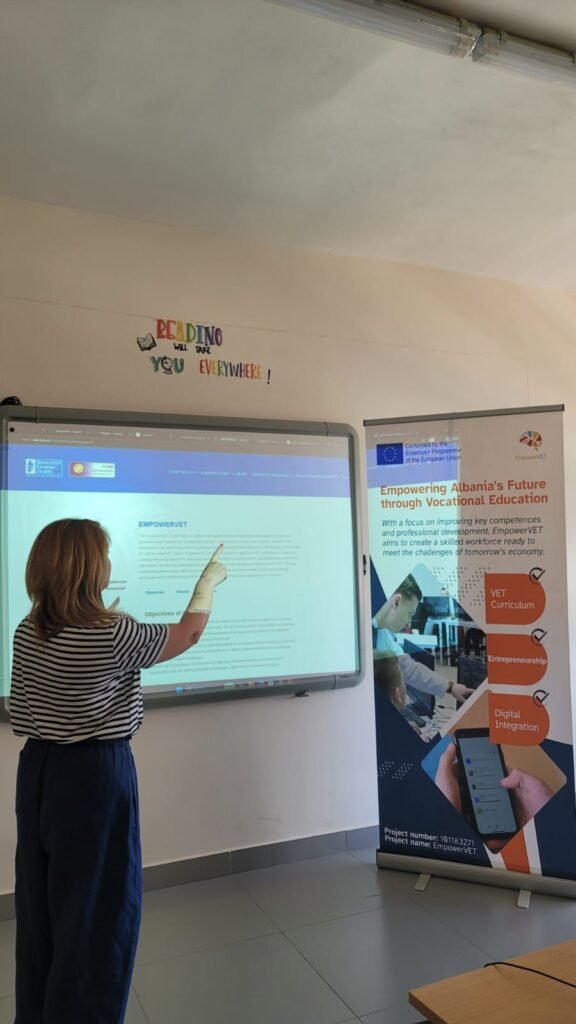
Once the problems had been identified, students moved to the idea-generation phase. Using Design Thinking techniques such as brainstorming and collaborative discussions, they developed a variety of entrepreneurial concepts. The proposed ideas included eco-friendly school products, digital services for students, school-based initiatives, and tourism-related services.
The next step focused on transforming ideas into business concepts. Students defined their products or services, identified target customers, discussed value propositions, and explored basic pricing and marketing approaches. Working together in teams allowed participants to exchange ideas, improve their concepts, and strengthen their communication and teamwork skills.
The activity concluded with a Startup Pitch Event, where each team presented its entrepreneurial idea. Students confidently explained the problems they had identified, the solutions they proposed, and the potential impact of their business concepts. The presentations demonstrated not only creativity and innovation but also a growing understanding of entrepreneurship and customer-oriented thinking.
Throughout the challenge, students developed a wide range of competences, including entrepreneurial thinking, creativity, communication, teamwork, problem-solving, and basic business planning. More importantly, they learned that innovation starts with understanding people’s needs and having the courage to turn ideas into action.
The Student Startup and Entrepreneurship Challenge demonstrated how EmpowerVET methodologies can successfully support entrepreneurship education in vocational schools. By combining Design Thinking with Competence-Oriented Learning, students were able to develop practical skills, gain confidence, and experience a learning journey that connected education with real-life opportunities.
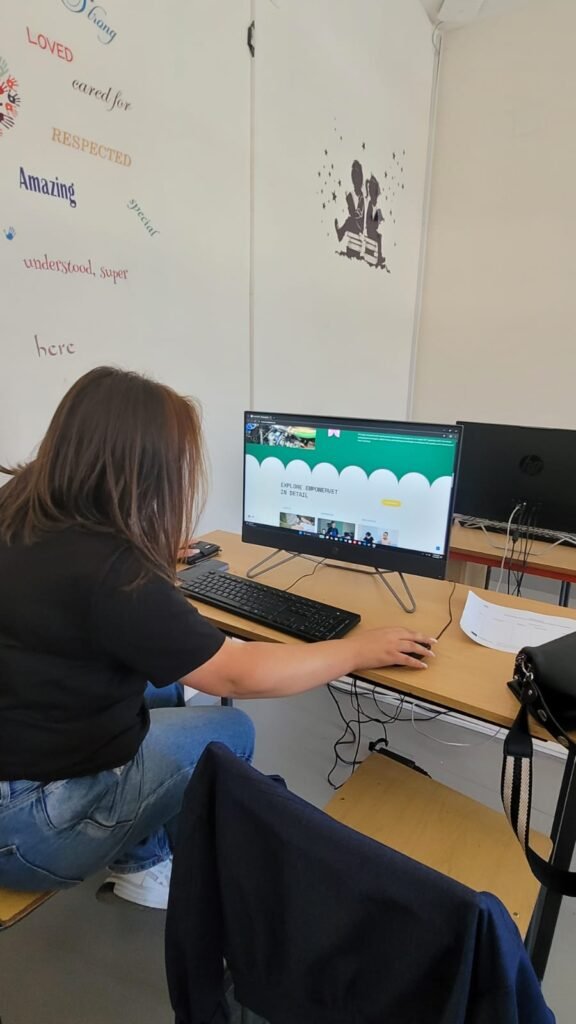
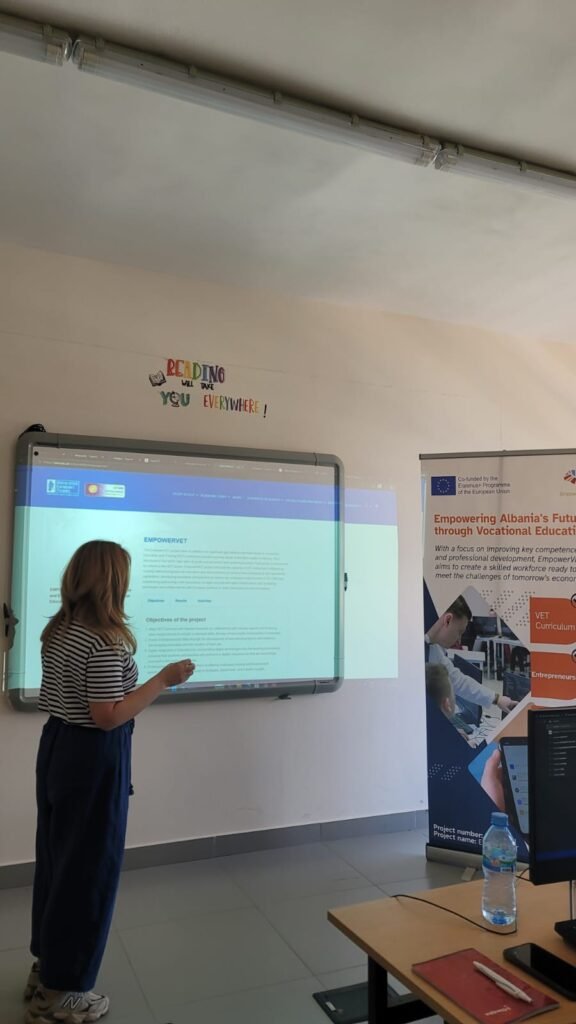
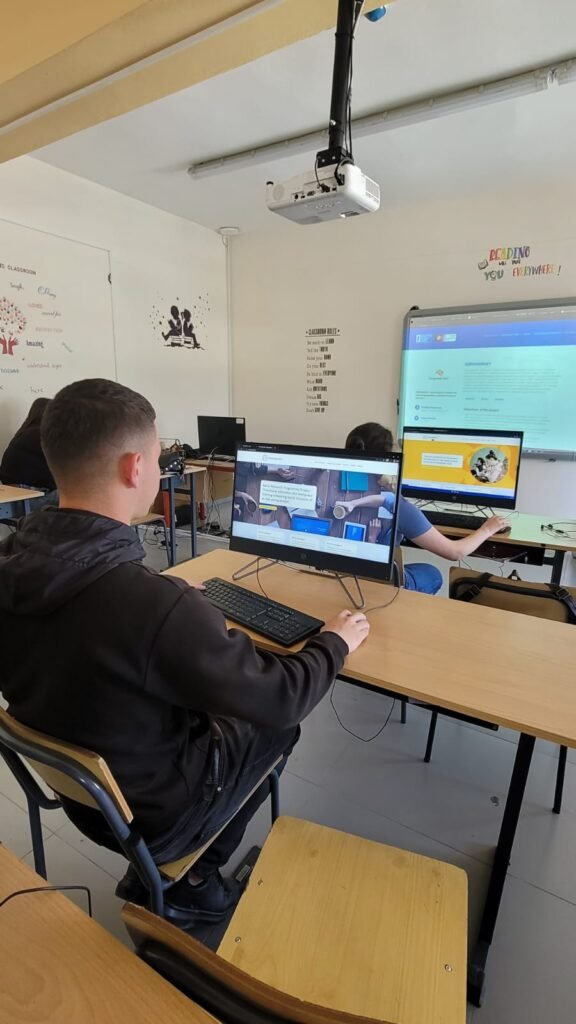
This pilot activity represents another important step in transferring EmpowerVET approaches into the Albanian VET sector and empowering young people to become active, creative, and entrepreneurial citizens.
Disclaimer

Funded by the European Union. Views and opinions expressed are however those of the author(s) only and do not necessarily reflect those of the European Union or the European Education and Culture Executive Agency (EACEA). Neither the European Union nor EACEA can be held responsible for them.